Introduction
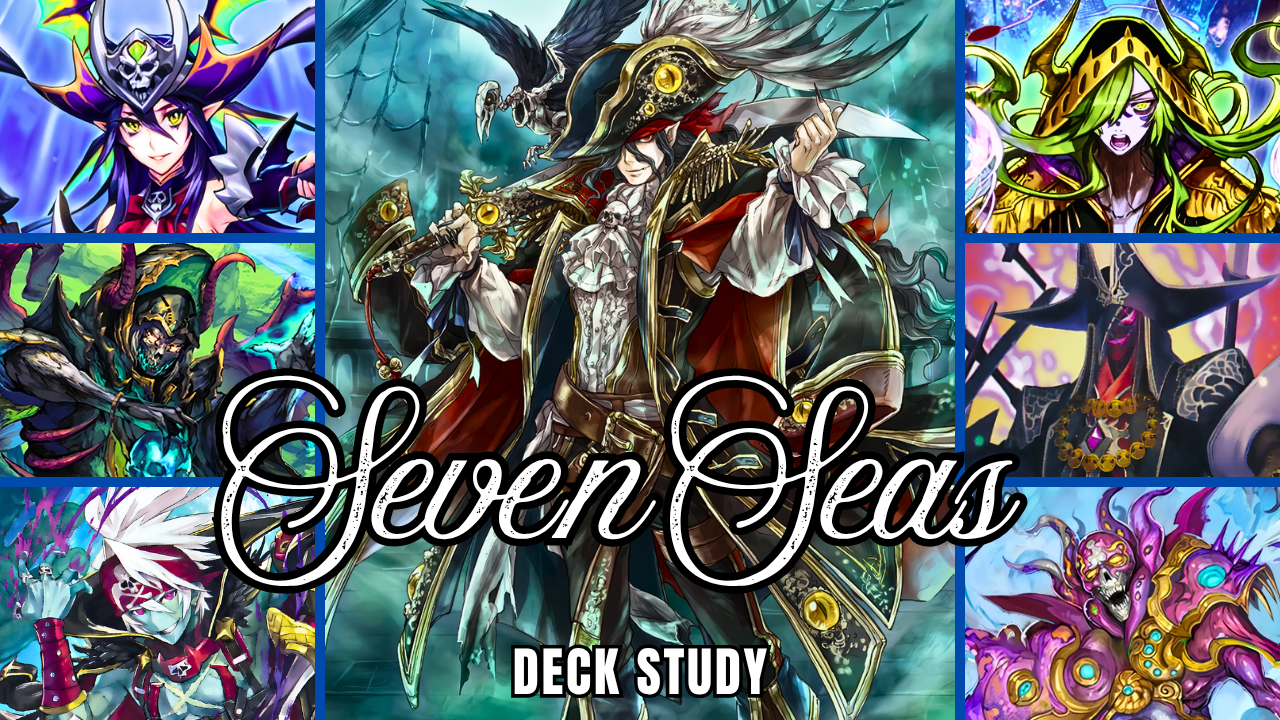
Hi amigos! Today we’re diving into the Seven Seas deck in G Format. It blends the revival power of both Nightrose support with the classic Seven Seas engine, creating an aggressive strategy that can churn out multiple attacks while maintaining resources.
With growing interest in G Format and the G-Boot Server tournaments increasing in players, it’s the perfect time to visit this deck and highlight how it plays, its key combos, and its strengths in the current G community landscape.
Invite to G Boot Server (never expires): https://discord.gg/554VYUGDc9
- Introduction
- Core Strategy
- Grade 3 Lineup
- Grade 2 Lineup
- Grade 1 Lineup
- Grade 0 & Triggers
- G Zone
- Example Plays
- Other Cards To Consider
- Closing Thoughts
- Support The Blog/YouTube Channel
- Update Log
Core Strategy
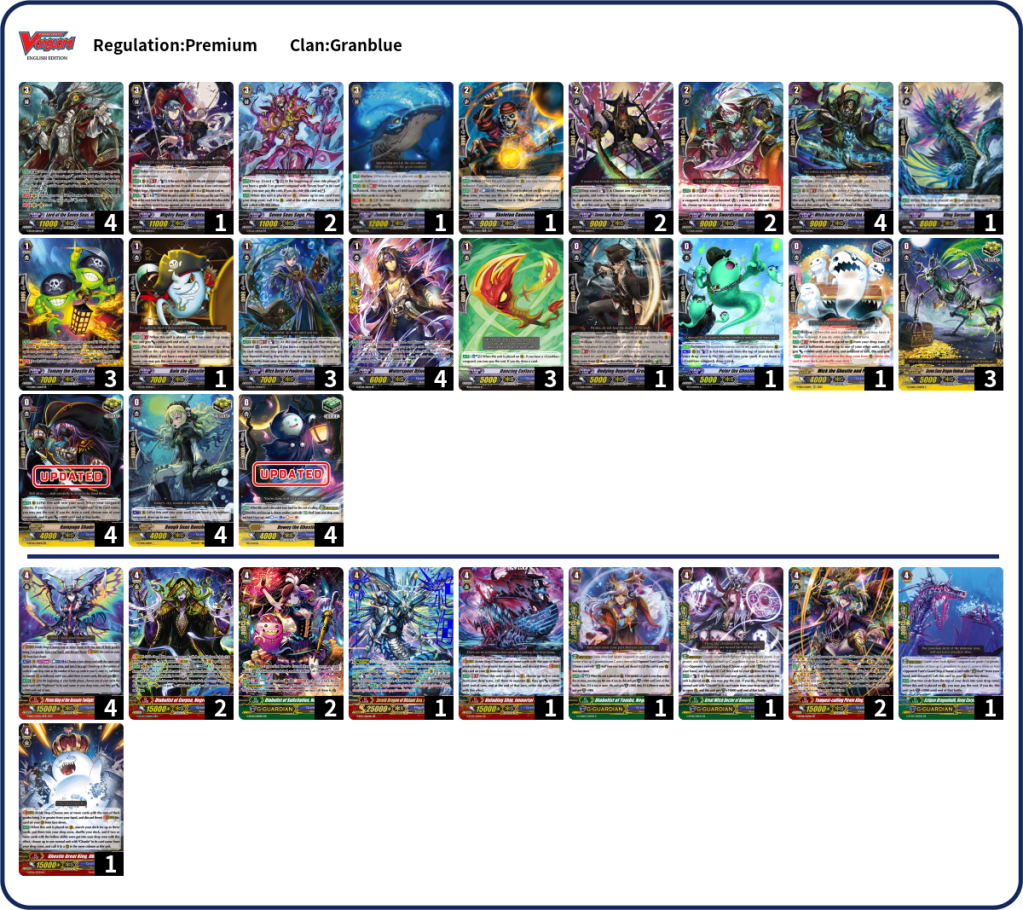
Deck Log: https://decklog-en.bushiroad.com/view/6YC1Y
Deck Code: 6YC1Y
At its heart, Seven Seas combines multi-attack pressure with massive field revival plays once it gets to the Stride turns.
In the early game, you can apply pressure and generate advantage with cards that aren’t Generation Break (GB) restricted such as:
- Cutlass, Rough Seas Banshee, and Peter the Ghostie (starting Vanguard)
- Helps with hand advantage, set up drop zone, make use of early RGs
- Slash Shade for 4th attack if your Vanguard has Seven Seas name
In the mid-to-late game, cards like Negrobone/Negrosonger allow explosive turns when paired with Nightmist‘s Break Ride skill. While using Nightstorm, Slash Shade, and Colombard to extend more attacks in the process.
Remember that strides gain the name of the Heart card too. So when you’re on Twilight Nightrose, you’re both a “Nightrose” and “Seven Seas” Vanguard simultaneously.
Overall, this makes the deck particularly strong in early and mid-game scenarios, punishing opponents who try to Grade 2 game stall or can’t do much in the early game. By leveraging both the Nightrose and Seven Seas synergy, the deck balances flexibility with relentless offense.
Grade 3 Lineup
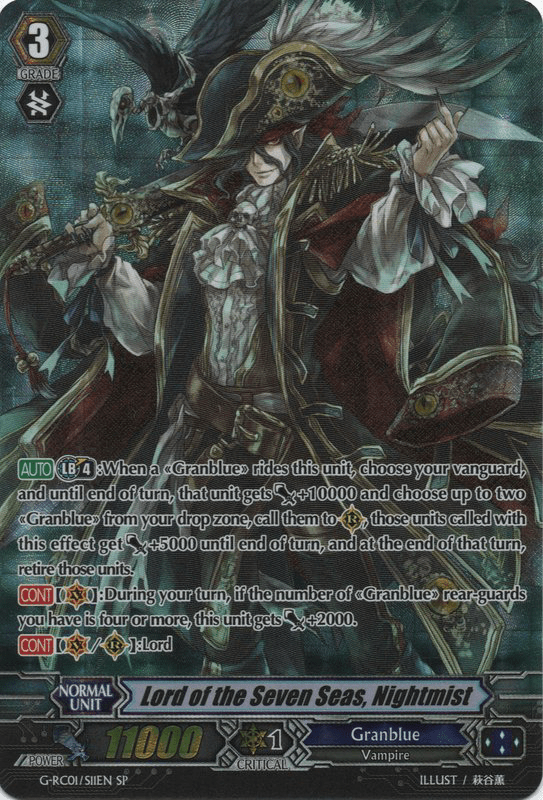
Nightmist (Break Ride)
Your go-to ride. The Break Ride skill sets up huge power swings by reviving multiple units at once. Ideally, you trigger the Break Ride skill on Turn 4 with your stride being Negrosonger, reviving Negrorooks as 21k beaters. Which forces massive shield investment from opponents in the first few attacks.
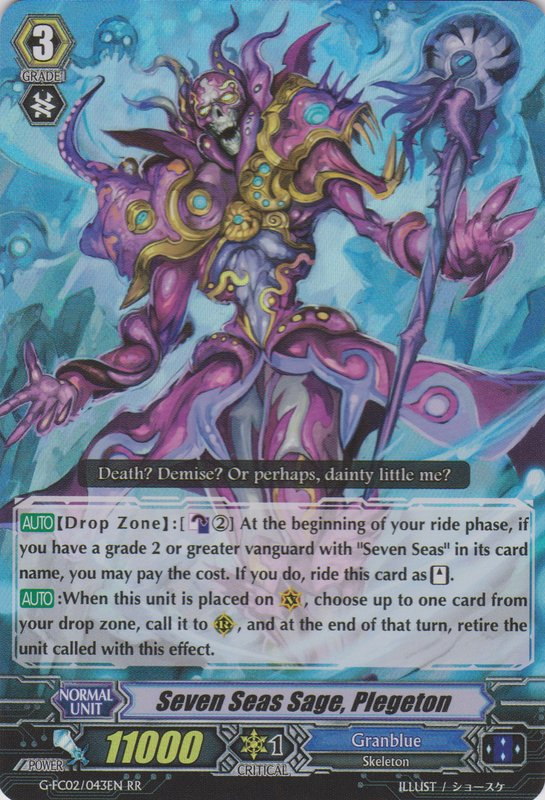
Plegeton
This card provides on-ride revival for immediate setup and also acts as a safety net against Grade 2 game stalls. In events, I often found myself using this card to stabilize or push early. You can even consider doing a 3-3 split ratio with Nightmist.
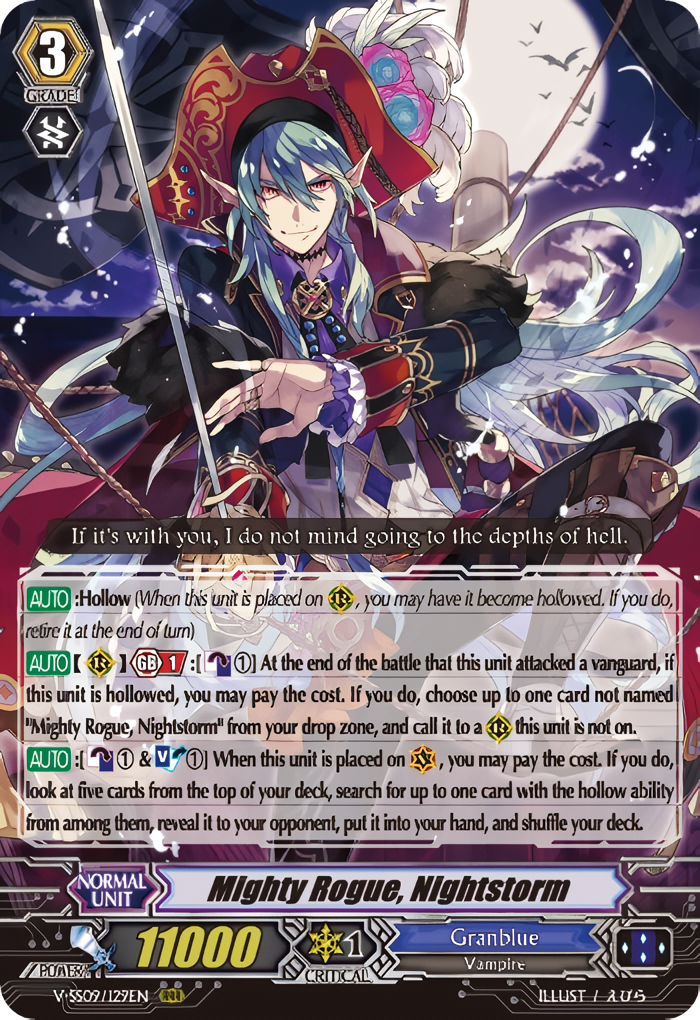
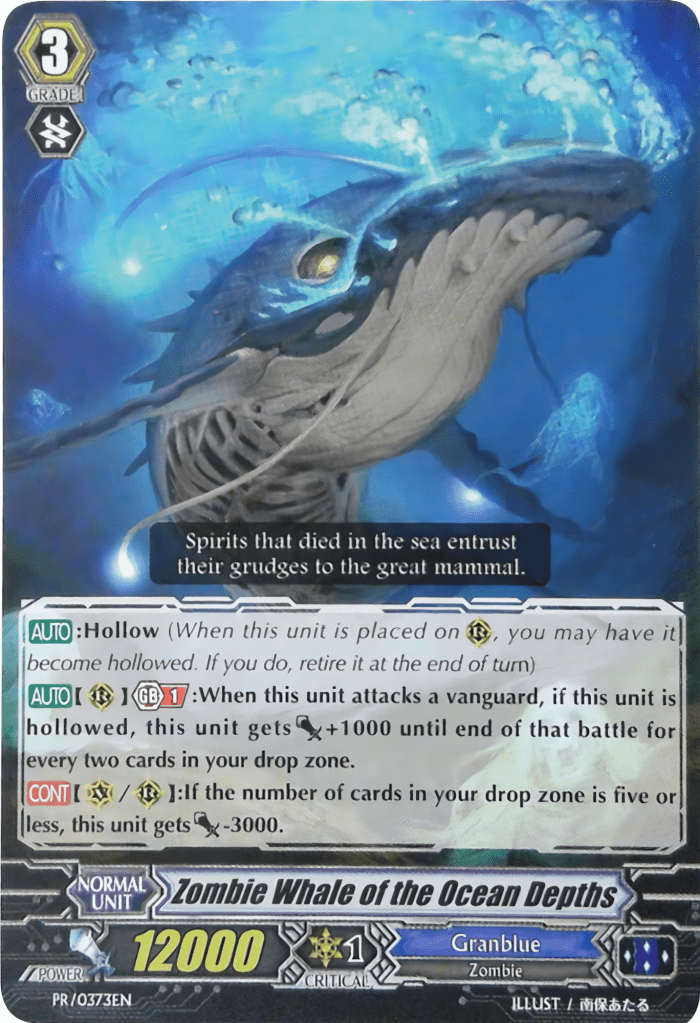
Nightstorm (1-of)
A generic attacker extender that hits 11k on its own and revives any RG. Since it’s a Hollow target, it works well in chaining with Negrobone for additional swings.
Zombie (1-of)
A generic beater that can scale to 21k by itself; with a booster, it can reach to 26k, and 31k. Works like a “budget Skull Dragon” for G Era. Also, a Hollow target for Negrobone.
Grade 2 Lineup
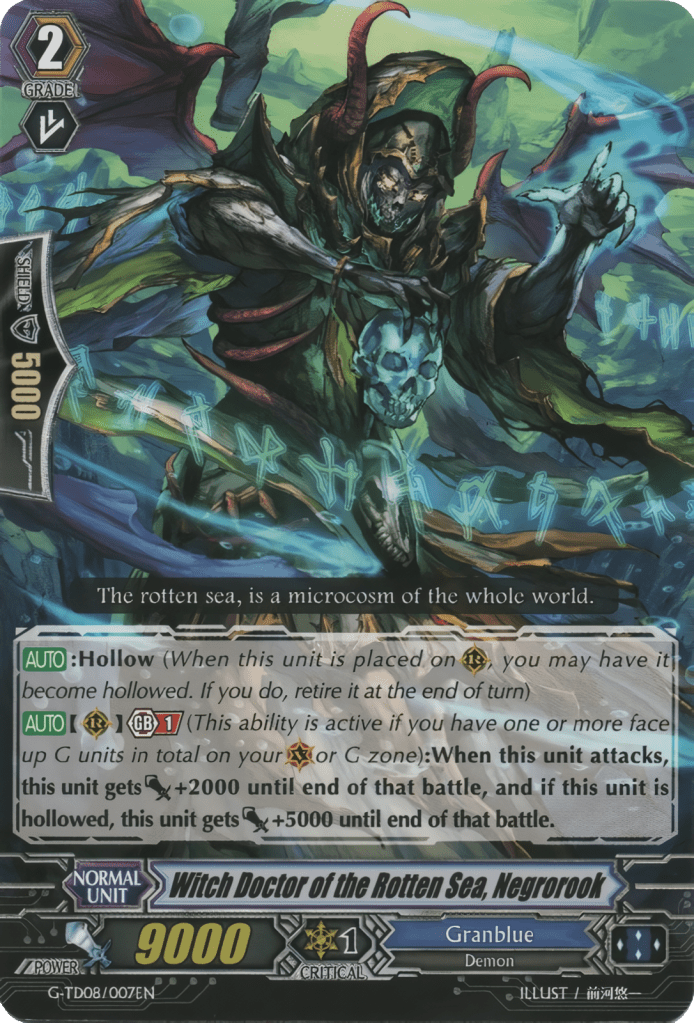

Negrorook
The bread and butter beater. Revive it again and again as a 16k attacker. Opponents are forced to commit at least 10k+ shield, especially when triggers stack here.
Cannoneer
Helpful to gain hand advantage and remove a problem RG when needed. A Hollow target for Negrobone.


Slash Shade
Enables an extra attack regardless of Generation Break. Great to get another attack in if a Negrobone, Nightstorm, or Colombard were removed by a G Guard Disruptive play (prior to the Vanguard attacking).
Colombard
Generic attack extender into Negrorook or Nightstorm, but needs a booster.
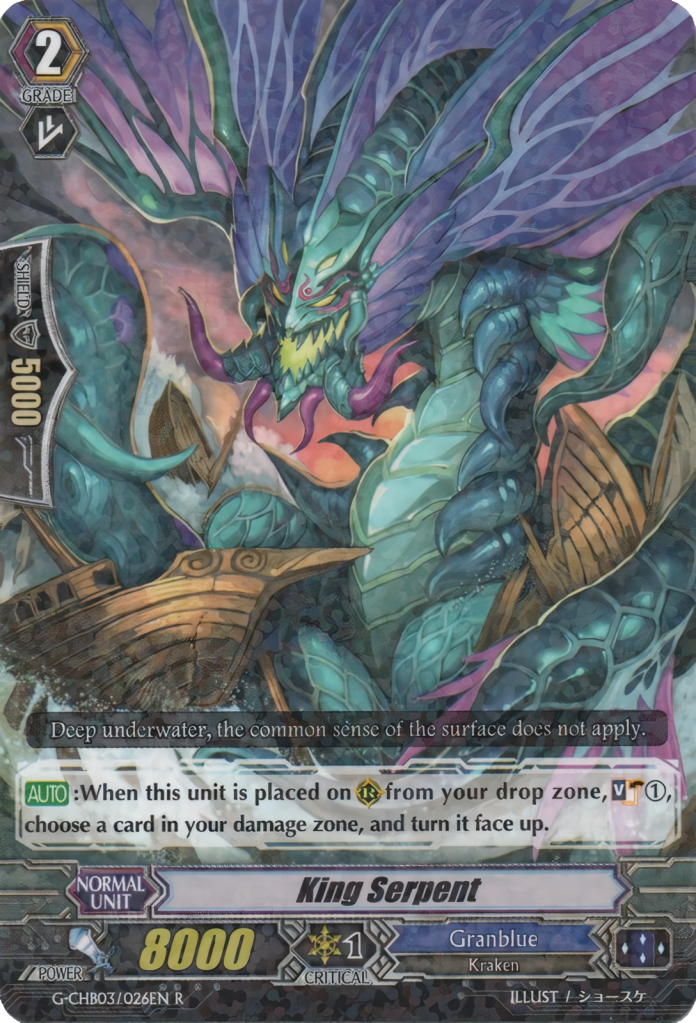
King Serpent
Resource management king. Countercharges (CC) and Soulcharges (SC) to fuel your plays. Refund Twilight Nightrose’s massive field call immediately, thus use your Counterblast (CB) for the battle phase. You can use Nightmist’s Break Ride skill or Plegeton when you have no damage faceup, thus enabling your turn with a CB.
Grade 1 Lineup
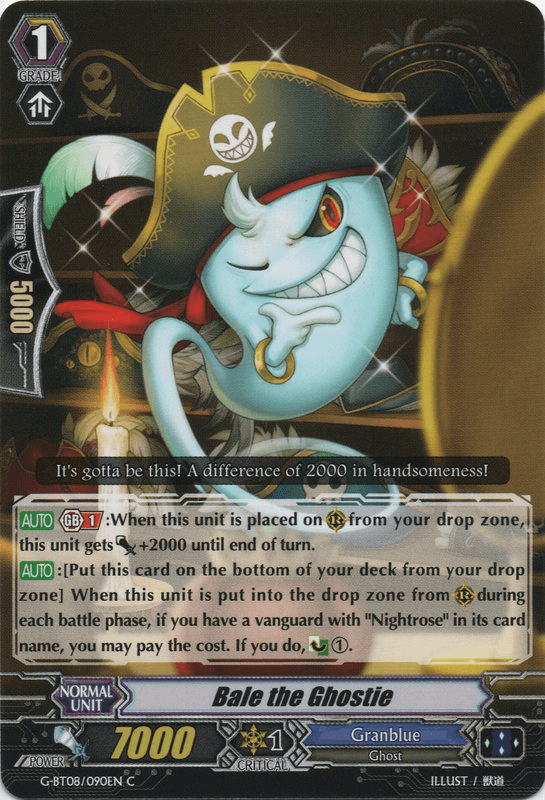
Bale the Ghostie
More Countercharge support that pairs well with Negrobone on Twilight Nightrose turns.
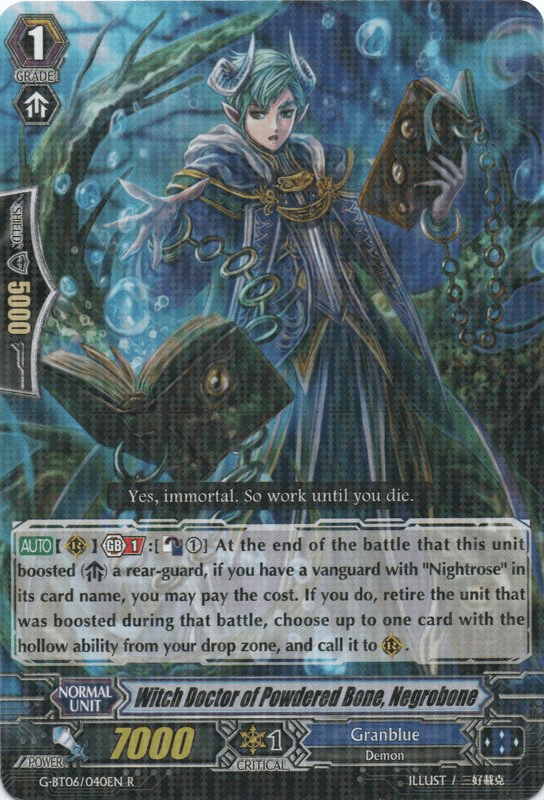
Negrobone
Your main extender during battle on Twilight Nightrose turns. Being able to revive attackers like Negrorook or Nightstorm mid-combat is what pushes the deck’s offensive ceiling. You can boost a Negrorook to make a 23k column attack, use its skill to retire the boosted Negrorook, and immediately revive it again.
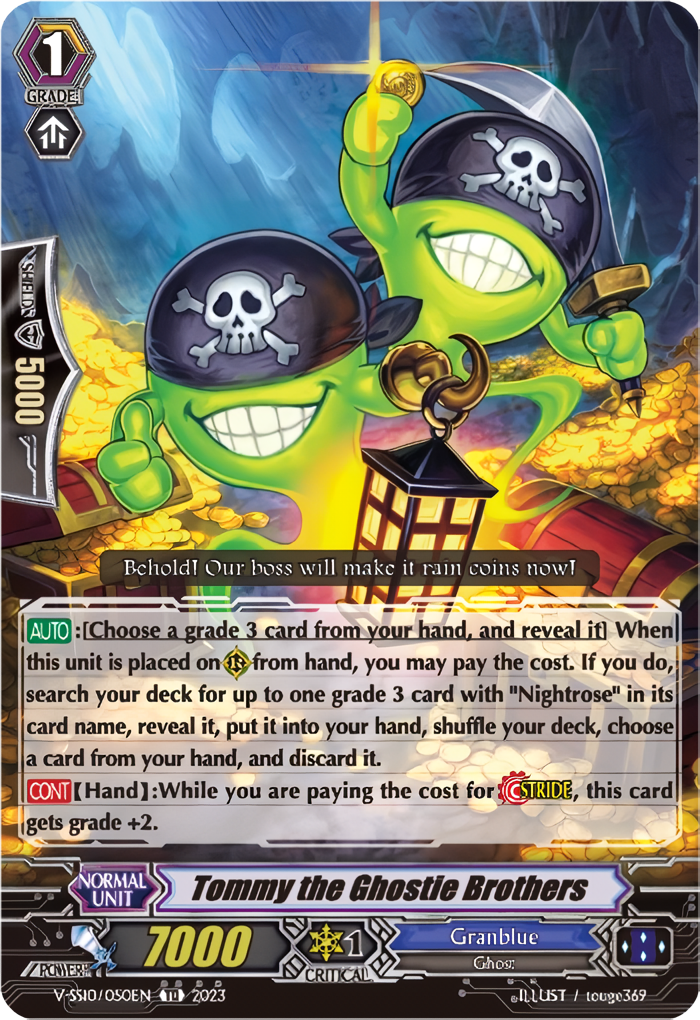

Tommy
You want to keep your Seven Seas G3s for Break Riding, so you need more cards to pitch for Stride.
Cutlass
Soulblast to draw, helping you dig into combo pieces. Early call pressure is important for this deck.
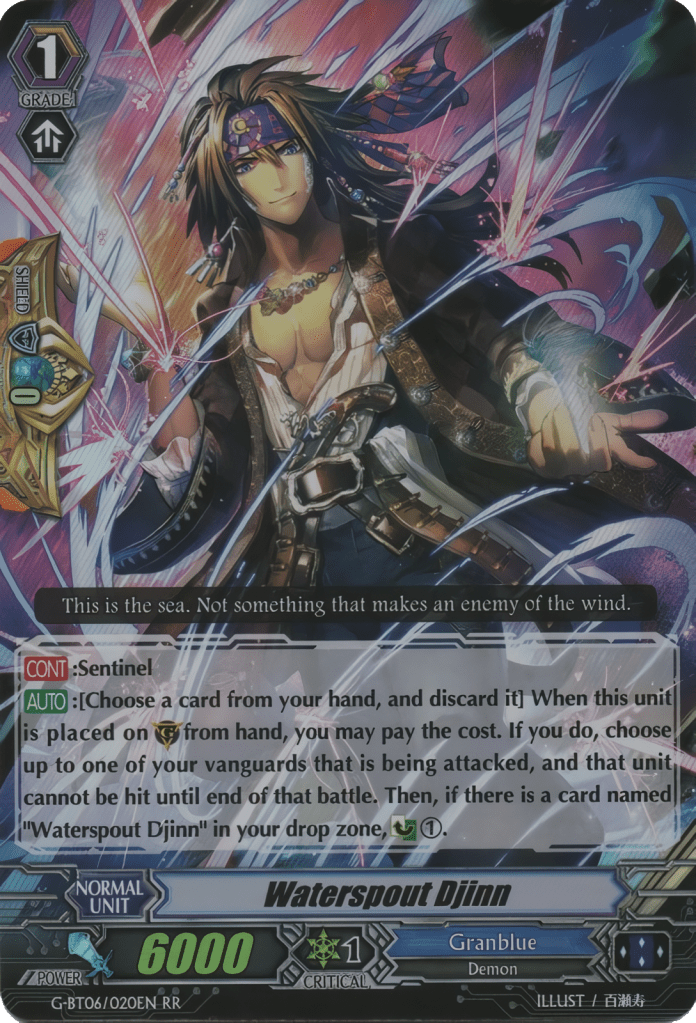
Water Spout Djinn
Countercharge PG. Great ride target for Turn 1, so it can be Soul Blasted later by Cutlass. Then when you PG, you’ll CC sooner. While excellent, I recommend trimming to 3 copies to make room for Gust Djinn (revivable PG with Negronora).
Grade 0 & Triggers

Peter the Ghostie (Starter)
Helps Granblue’s “slow start” issue by milling, Soulcharging, and drawing early. Great to make Cutlass live on Turn 2.
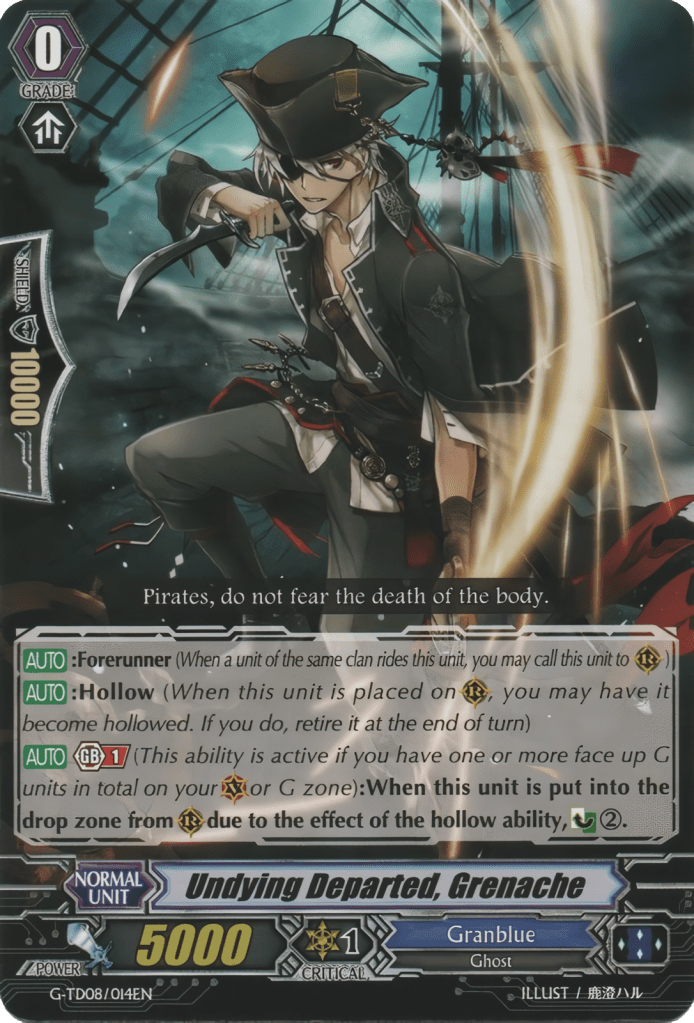
Grenache
Granblue still needs to CC massively when possible, so have one in the main deck. If you’re out of CB, you can’t do much.

Rough Seas Banshee
Soul utility and draw engine. Excellent for fueling Tempest Calling turns and Cutlass. Can call early on as a booster to make 9k/11k columns, then next turn use the skill to regain advantage.
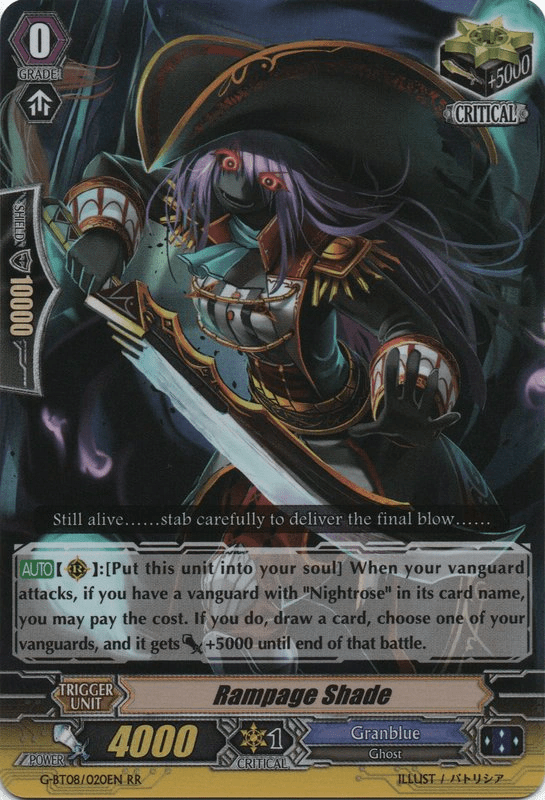
Rampage Shade
More Soul generation and draw engine when on Twilight Nightrose.
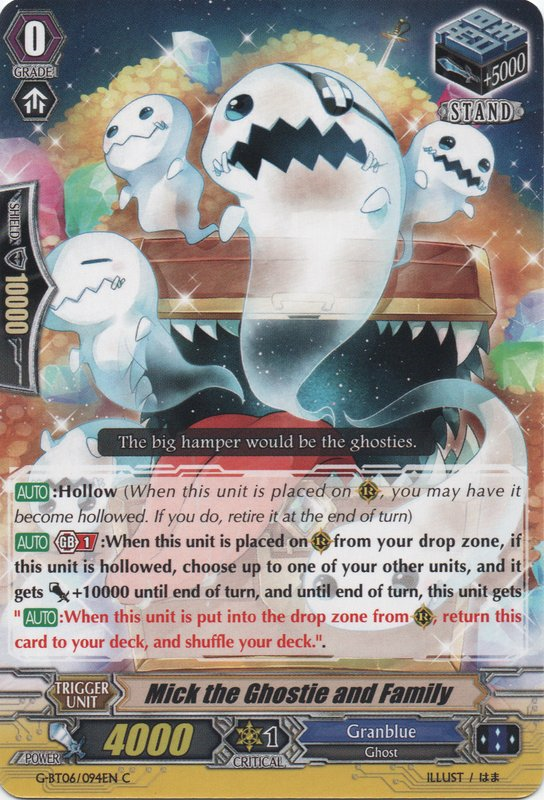
Mick
Great card to use when needed to give power and recycle back to the deck. Note that the modified G Banlist allows for 2 copies. You’re welcome to add the 2nd copy.
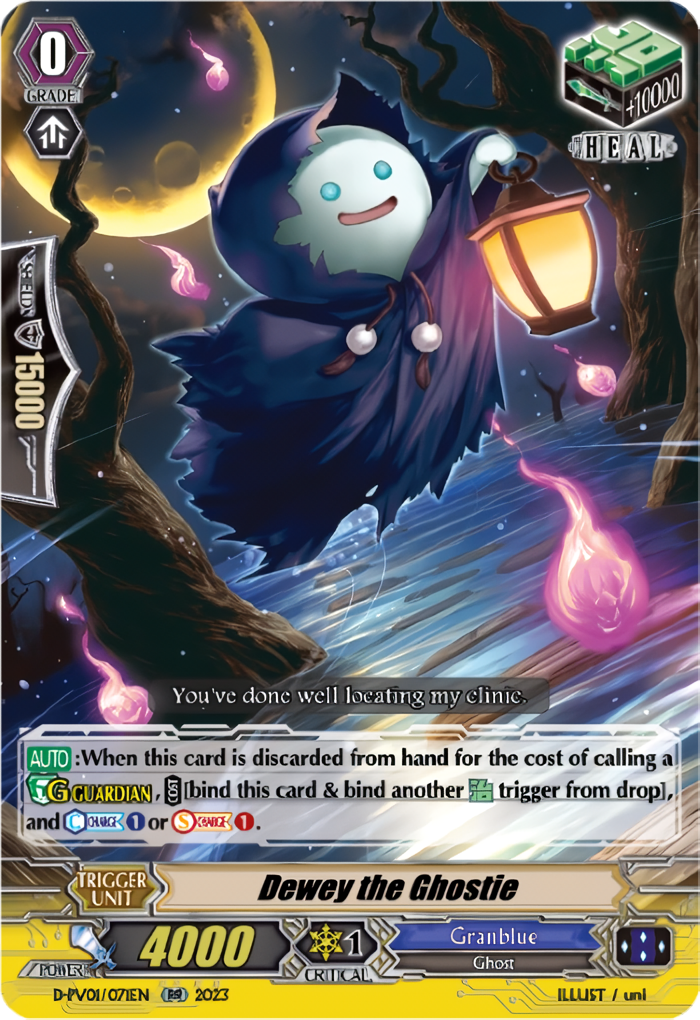
Dewey
We got these too late when G Era ended in English, but Granblue can definitely benefit from a CC or SC.
The rest are normal Crits, for more deadly pressure. The name doesn’t matter; I chose to have the Seven Seas Crits.
G Zone
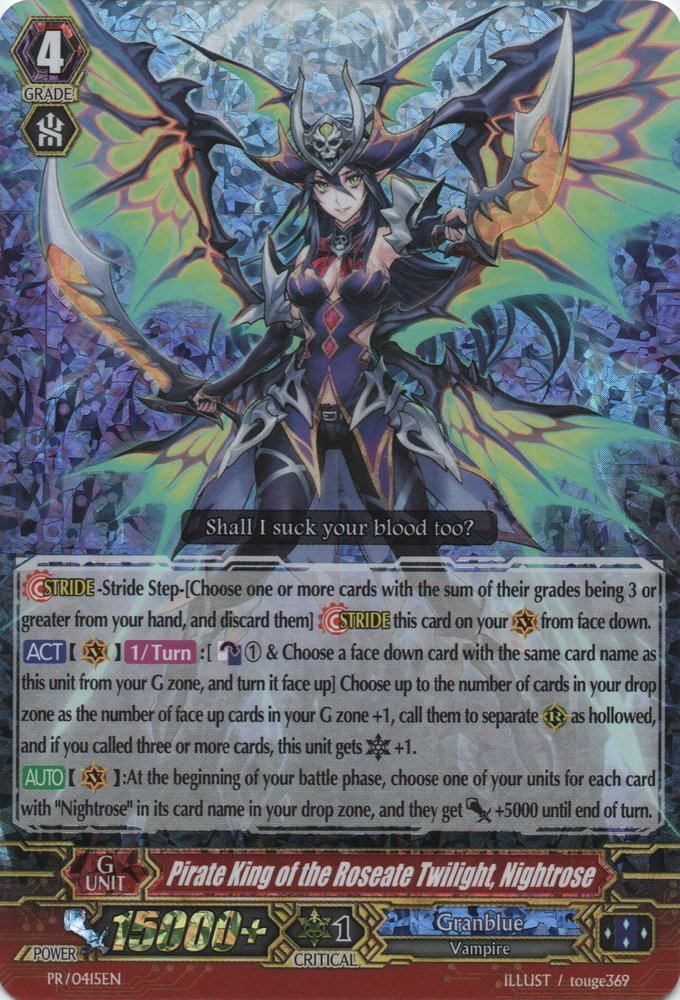

Twilight Nightrose
The stride you want to go to on your 1st and 2nd stride turns. Revives multiple units while granting critical pressure on larger revivals. On your 1st stride turn, it’ll revive 2 RGs only. That’s okay, even if you miss the Crit gaining part, you essentially want to build an effective board while having some multi-attack pressure. You have the Nightrose name, so both Negrobone and Bale are live.
Once you have 3+ RGs revived, you can take advantage of having Crit pressure. We don’t play G3 Nightroses in the main deck, so we just ignore that skill.
Negrosonger
Your key “finisher.” Multi-attack turns with 4–9 swings overwhelm most G decks. Perfect synergy with Break Ride turns. Your available CB is what determines how far in attacks you can do. King Serpent can help CC during your main phase and battle phase to hit the highest threshold.
Your key RG attack extenders are Slash Shade, Nightstorm, and Colombards. Remember, you don’t have the Nightrose name this turn, so Negrobone doesn’t work.
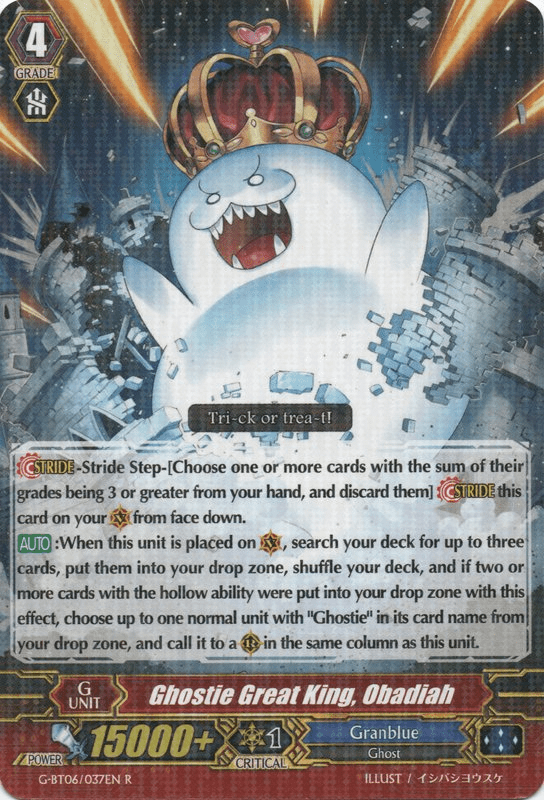
Obadiah
Still useful for setting up the drop zone. This is only a backup when you can’t do an effective stride turn with Twilight Nightrose or Goauche.
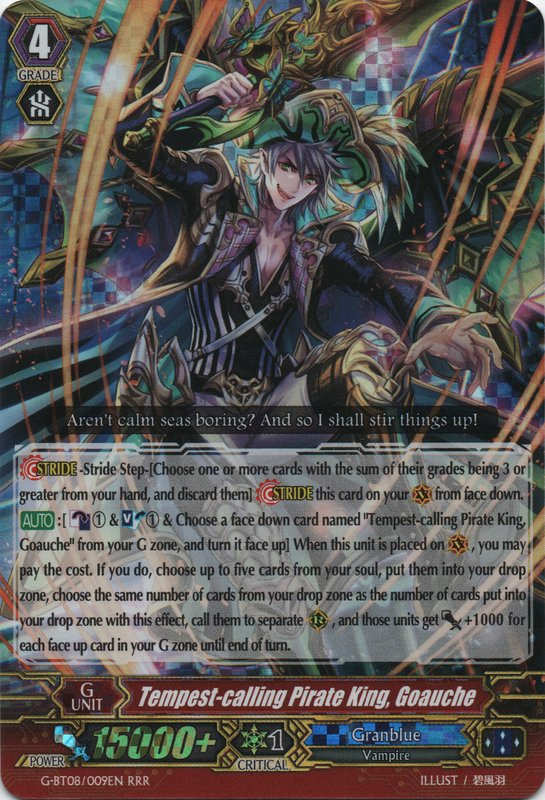
Goauche
Great when you’ve built up a massive Soul with Rough Seas Crits, King Serpent, reriding, etc. Doesn’t come up often, but it can be a great alternate 1st/2nd stride. Remember, you miss out on the Nightrose name.
You can reuse the Soul Blasted Rough Seas Crits and generate hand advantage. And remember, the RGs get +1k for each face up G Zone card.
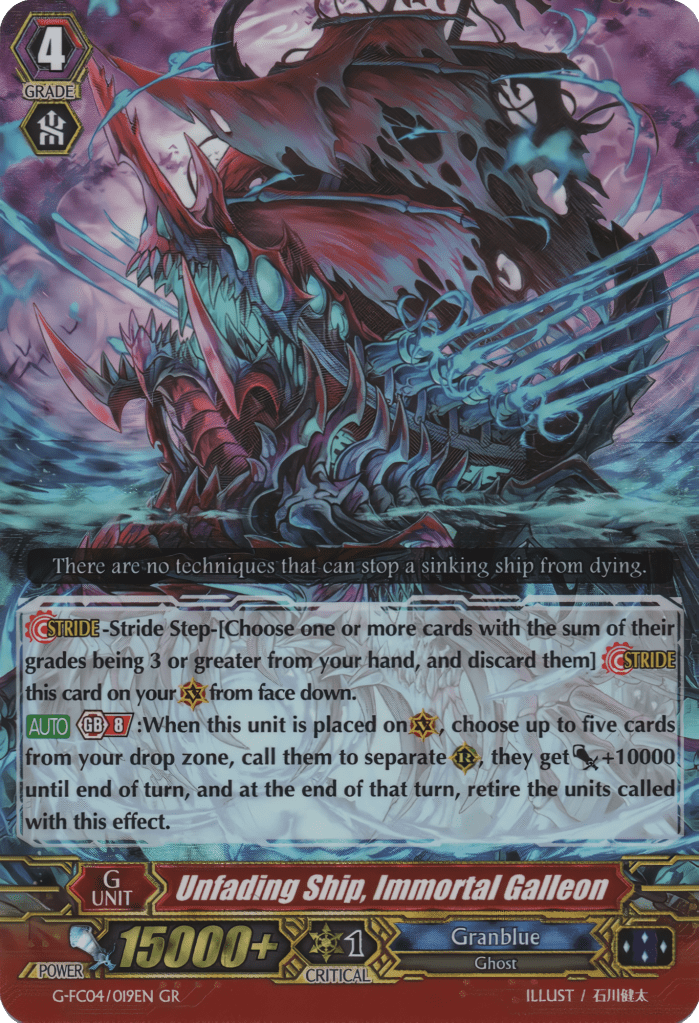

Galleon
Late game, you may be out of CB, so the GB8 is a great alternative to close games. You can use King Serpent to CC1 and then extend an attack during the battle phase. Remember, the revived RGs get +10k, including your boosters.
Megiddo
Another BIG closer. Revives a full board of beaters like Negrorooks and Whale for six or more attacks. 21k Negrorooks hurt already as is. This turn is less susceptible to G Guards that Disrupt your turn like Denial Griffin, Heteroround, etc. since they only take out 1 of the beaters.
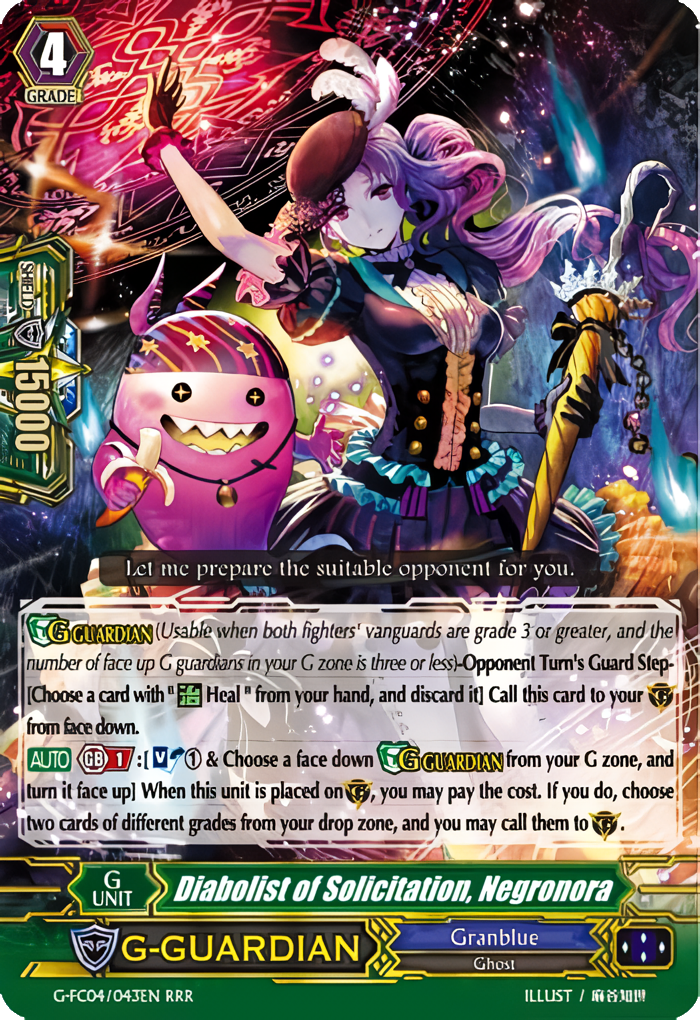

Negronora
Reliable big shield and flipping more cards face up in the G Zone for Negrosonger’s power-gain. If you play the old Gust Djinn PG, then you can PG from the Drop Zone with it.
Negromode
Good 1st G Guard if you don’t have a face up G Zone card for GB1 for Negronora. Gets a card out of Soul, if needed.

Negrolily
We only play 1 for a shield when we don’t have Soul for Negronora and Negromode. Remember the Negrolily-Cannoneer play is only when you have a G3 Nightrose Vanguard. You can still technically revive a Ghostie like Bale or Tommy for next turn usage.
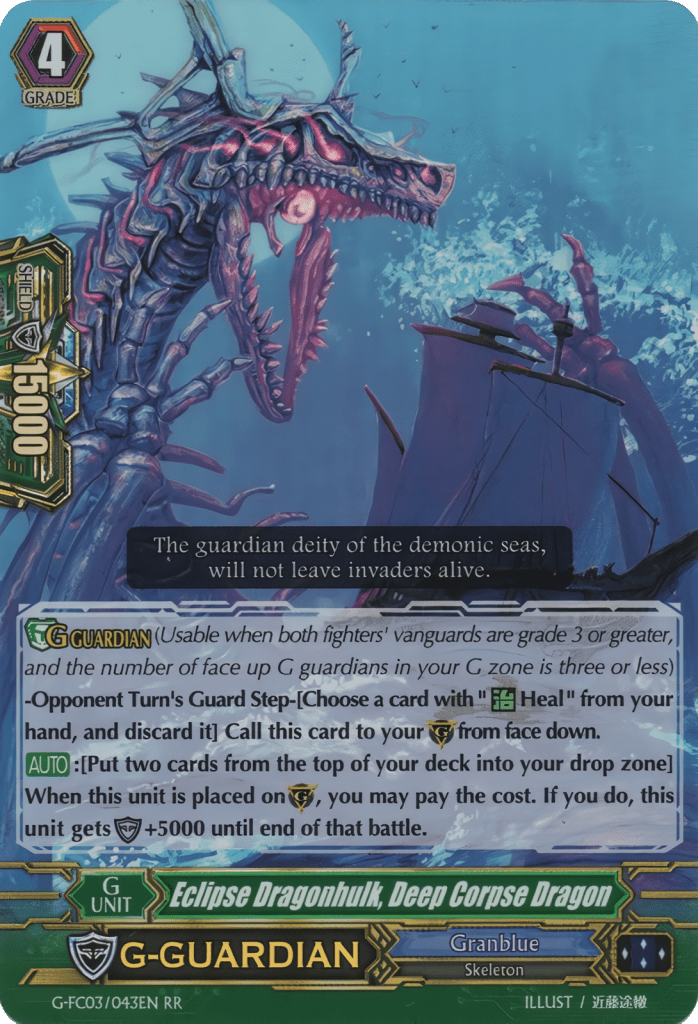
Corpse Dragon
Great way to get additional milling early on. Be careful in the late game for potential deck out, though.
Example Plays
Negrosonger Breakride Turn
Ride Phase and Main Phase:
- Ride Plegeton to Break Ride over Nightmist
- Nightmist’s skill to revive a Negrorook and Nightstorm (they both gain +5k)
- Plegeton’s skill revives a booster like Tommy or Grenache on a RG column
- Stride into Negrosonger
- You can call an additional booster or do any other main phase setup
Battle Phase Sequence (4 CB Example):
- Negrorook (21k)
- Nightstorm (16k) -> Use CB1 to revive another Negrorook over the existing one
- Negrorook (16k)
- Negrosonger (26k)
- On attack, use CB1 for Slash Shade to Retire Negrorook and call over the Nightstorm (or vice versa)
- Stack any triggers onto Slash Shade
- Negrosonger’s skill use CB1 to revive the Nightstorm in the other open front RC
- Slash Shade (11k+)
- Nightstorm (11k + 5k x # of G Cards faceup) -> Use CB1 to revive another Negrorook
- Negrorook (16k) with booster
You can use Whale throughout the combo to hit a bigger threshold. You can use King Serpent and Colombards to extend more attacks.
Ride Progression, Twilight Nightrose stride turns (YouTube video timestamped)
Example Gameplay (G Tourney Finals)
Game 1:
Games 2/3:
Other Cards To Consider
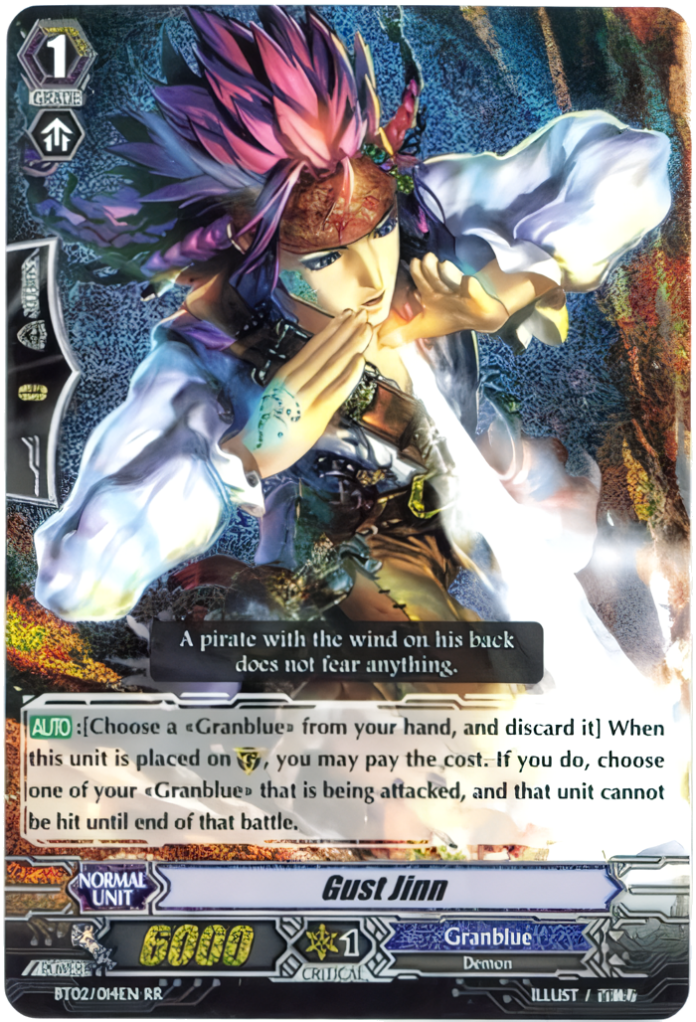

Gust Djinn
Depending on if you value CC more than flexibility on PGing from the Drop Zone, you can consider the 3-1 ratio.
Negrolazy
Another attack extender with the Nightrose name. The benefit is that it’ll CC/SC at the end of turn. This should be your 2nd to last RG attack, so it can revive a G2-or-lower RG like Negrorook. The other conflict is that the Whale is a G3, so you can’t revive that, unfortunately.
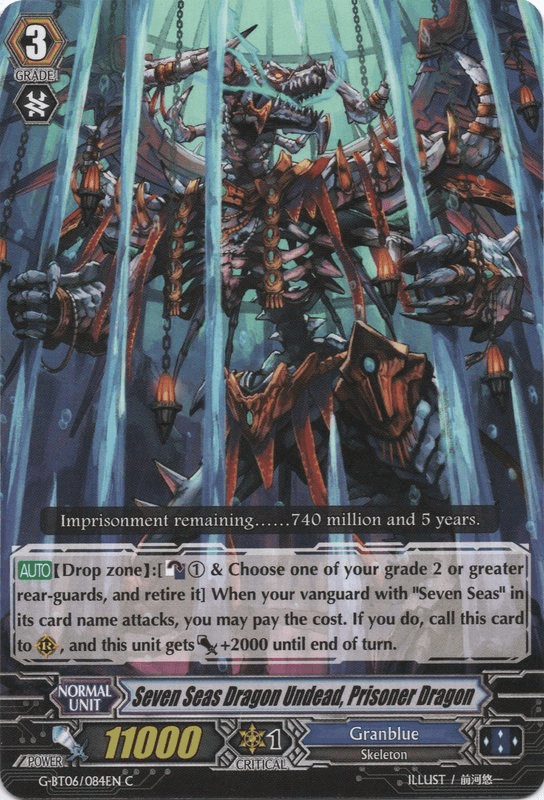

Prisoner Dragon
This is basically another Slash Slade, but as a G3. Makes a 13k number, which is awkward. Some cons are that it doesn’t have shield value and has to retire a G2-or-greater RG. You could replace some Tommy’s since it’s basically a stride fodder.
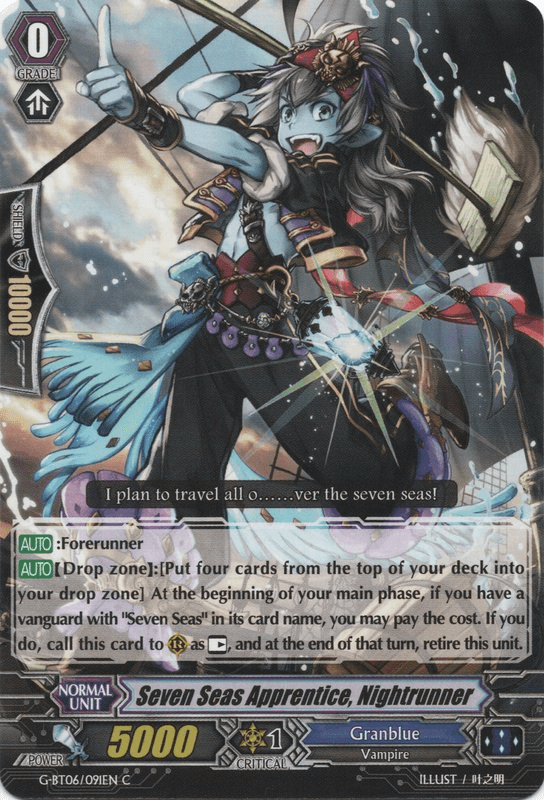
Nightcrow and Nightrunner (both are limited to 1 copy each)
These are other good Seven Seas cards that you splash in. They’re limited to 1 each, so you can easily swap 1-2 cards of your choice. Nightrunner can help speed up milling and be a retire target for Nightcrow. Nightcrow is nice on force retiring Mick, especially if you do play 2 copies of Mick. However, board building isn’t a problem once you get to the stride turns. Especially once Twilight Nightrose is able to fill the full board.

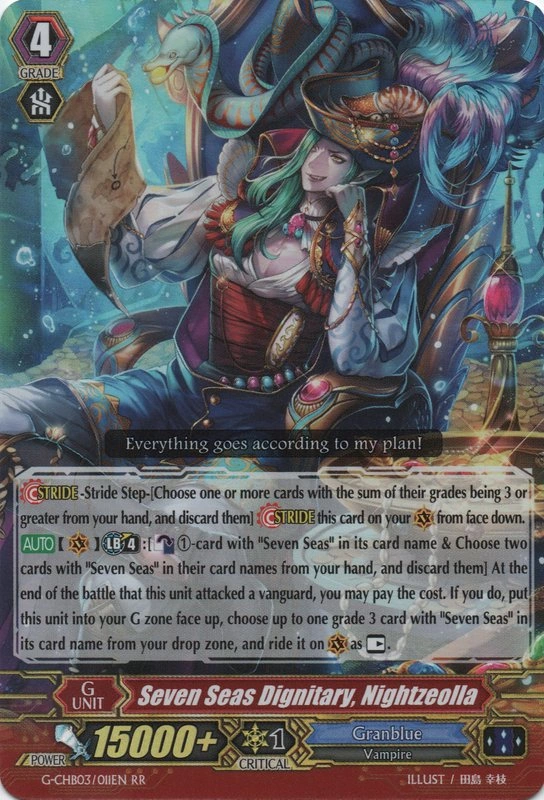
Loved Nightmist and Nightzeolla
You’re probably wondering, what about the Seven Seas strides? Well Loved Nightmist is basically power creeped by Twilight Nightrose. If you want to have 1 copy to help preserve Twilight Nightrose copies, you can. Just know you’ll miss out on the Nightrose name.
Nightzeolla is an awkward card. Ideally, it wants to take advantage of activating a Break Ride skill during the battle phase. However, it rides the G3 as Rested, so no 2nd Vanguard attack. In theory, you could Break Ride during the Ride phase and do it a 2nd time during the Battle Phase. Although I feel you’re better off with normal Break Riding and then extend attacks more with Negrosonger.
Nightzeolla has name-restrictions to its cost, both the CB and discarding two cards. You’re going minus 2 cards for more attacks. And lastly, the main reason I hate “end of battle Break Ride skills” is that you can unexpectedly heal back to 3 damage from your Triple Drive. It’s an awful feeling when you can’t get the Break Ride skill since you’ve committed to that play. I’ve learned that the hard way when Bad Bounty was released years later in Premium.
For more Seven Seas support check out the Wiki: https://cardfight.fandom.com/wiki/Seven_Seas
Closing Thoughts
Revisiting Seven Seas in G Format has been a blast. The synergy between Nightrose support and the classic Seven Seas core gives the deck both nostalgia and modern playability. In my runs with G community events, this build held its own against other popular G decks, showing it still has teeth in today’s meta.
If you’re looking for a fun, aggressive Granblue deck that rewards sequencing and creative revival plays, Seven Seas is worth sleeving up again.
As always, feel free to drop your thoughts and questions in the comments. I’d love to discuss plays, ratios, or even alternative techs you’ve found successful. Until next time, amigos!
Support The Blog/YouTube Channel
Deck Boxes, Playmats, Sleeves, Binders:
Dueling Guard (15% off Discount) Link: https://duelingguard.com/CommanderJaime
Singles, Boosters, and Clan Bundles:
50 Cards Shop (use promo code “Jaime” for 5% discount): https://www.50cards.shop/shop
Trading Card Mint (use promo code “jaime” for 7% discount): http://tradingcardmint.com/
Card Trader Affiliated Link: https://bit.ly/44l1g5B
TCGplayer Affiliated Link: https://tcgplayer.pxf.io/Jaime
Commander Jaime’s Social Media/Links/Etc:
Update Log
- 10/1/25 – Newly published!
 Rogue of the Seven Seas